BIOMASS
An important source of
renewable energy!
Biomass includes a wide range of materials, including energy crops such as
switch grass and micanthus, agricultural sources such as corn husks, wood
pellets, lumbering and timbering wastes, yard wastes, construction and
demolition waste, and bio solids (treated sewage sludge). Gasification helps
recover the energy locked in these materials. Gasification can convert biomass
into electricity and products, such as ethanol, methanol, fuels, fertilizers,
and chemicals.
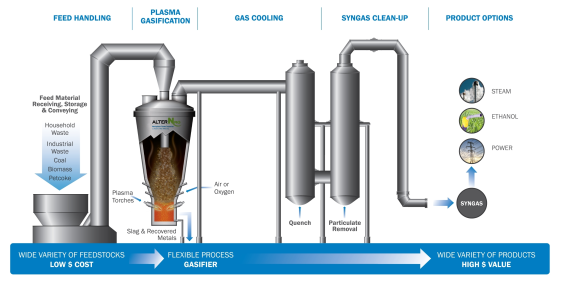
Biomass gasification
plants differ in several aspects from the large-scale gasification processes
typically used in our major industrial facilities such as power plants,
refineries, and chemical plants.
Feedstock
Biomass usually contains a high percentage of moisture (along with carbohydrates
and sugars). The presence of high levels of moisture in the biomass reduces the
temperature inside the gasifier, which then reduces the efficiency of the
gasifier. Therefore, many biomass gasification technologies require that the
biomass be dried to reduce the moisture content prior to feeding into the
gasifier.
Biomass can come in a range of sizes. In many biomass gasification systems, the
biomass must be processed to a uniform size or shape to feed into the gasifier
at a consistent rate and to ensure that as much of the biomass is gasified as
possible.
Air-blown Gasification
Most biomass gasification systems use air instead of oxygen for the gasification
reactions (which is typically used in large-scale industrial and power
gasification plants). Gasifiers that use oxygen require an air separation unit
to provide the gaseous/liquid oxygen; this is usually not cost-effective at the
smaller scales used in biomass gasification plants. Air-blown gasifiers use the
oxygen in the air for the gasification reactions.
Scale of plants
In general, biomass gasification plants are much smaller than the typical coal
or petroleum coke gasification plants used in the power, chemical, fertilizer
and refining industries. As such, they are less expensive to build and have a
smaller facility “footprint”. While a large industrial gasification plant may
take up 150 acres of land and process 2,500-15,000 tons per day of feedstock
(such as coal or petroleum coke), the smaller biomass plants typically process
25-200 tons of feedstock per day and take up less than 10 acres.
Biomass to Ethanol and Liquid Fuels
Currently, most ethanol in the U.S is produced from the fermentation of corn.
Vast amounts of corn (and land, water and fertilizer) are needed to produce the
ethanol. As more corn is being used, there is an increasing concern about less
corn being available for food. Gasifying biomass, such as corn stalks, husks,
and cobs, and other agricultural waste products to produce ethanol and synthetic
fuels such as diesel and jet fuel can help break this energy-food competition.
Biomass, such as wood pellets, yard and crop wastes, and “energy crops” such as
switch grass and waste from pulp and paper mills can be used to produce ethanol
and synthetic diesel. The biomass is first gasified to produce the synthetic gas
(syngas), and then converted via catalytic processes to these downstream
products.
Biomass to Power
Biomass can be used to produce electricity—either blended with traditional
feedstocks, such as coal or by itself. Nuon’s IGCC plant in Buggenum,
Netherlands blends about 30% biomass (chipped wood) with coal in their
gasification process to produce power.
Cutting Costs, Increasing Energy
Each year, municipalities spend millions of dollars collecting and disposing of
wastes, such as yard wastes (grass clippings and leaves) and construction and
demolition debris. While some municipalities compost yard wastes, this takes a
separate collection by a city—an expense many cities just can’t afford.
Yard waste and the construction and demolition debris can take up valuable
landfill space—shortening the life of a landfill. Many cities in the northeast
face a shortage of landfill space. With gasification, this material is no longer
a waste, but a feedstock for a biomass gasifier. And, instead of paying to
dispose of and manage a waste for years in a landfill, using it as a feedstock
reduces disposal costs and landfill space, and converts those wastes to power
and fuels.
Benefits of Biomass Gasification
-
Converting what would otherwise be a waste product into high value products
-
Reduced need for landfill space for disposal of solid wastes
-
Decreased methane
emissions from landfills
-
Reduced risk of groundwater contamination from landfills
-
Production of ethanol from non-food sources
Waste Gasification
|
Biomass Gasification
|
Plasma Gasification
|
Bio-fuel & Power
|
Potable Water |
Pyrolysis |
Financing |
About us |
Contact us

|