DESALINIZATION/PURIFICATION OF WATER
The quality of drinking-water is a powerful environmental determinant of health.
Assurance of drinking-water safety is a foundation for the prevention and
control of waterborne diseases.
Another potential source of revenue and profit from the waste to energy plant is
the production and sale of potable water. The following discussion of potable
water production and bottling is designed to show this.
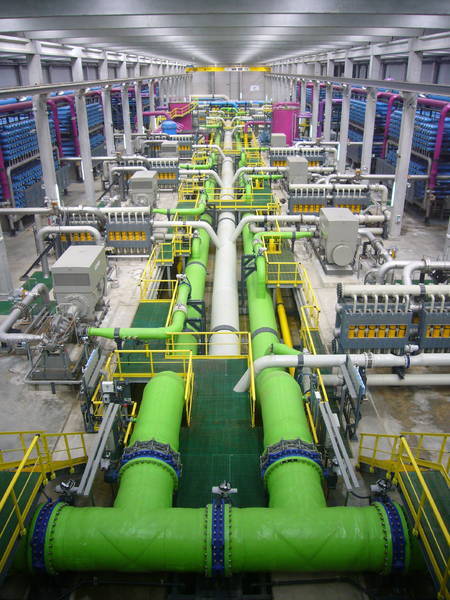
WPP uses the latest reverse osmosis desalinization/purification technology to
turn seawater, surface water, brackish water, waste water and other polluted
water into potable drinking water. In a single step, the system filters, softens
and disinfects these water resources to produce water that meets who's
regulations for drinking water. The system also clears away naturally occurring
organics and minerals, as well as contaminants from pollution, reduces salts,
hardness, nitrates, pesticides, color, bacteria, viruses and disinfection
byproducts.
The proposed desalinization/purification plant provides 250,000 gallons (946,250
liters) of potable water per day with a low energy consumption of 2.45 kWh per
cubic meter of water. The reason for this low consumption of electricity is an
energy recovery system incorporated into the plant. This volume of potable water
can easily and at low cost be expanded through the addition of other
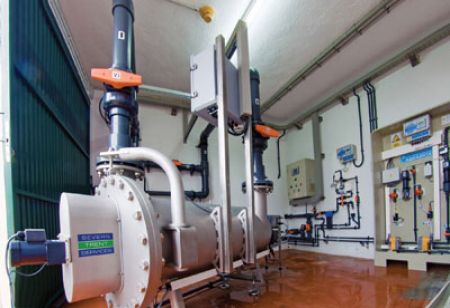
desalinization/purification plants. Below are schema and pictures of the water
desalinization/purification plant.
Desalinization/Purification plant
system processes
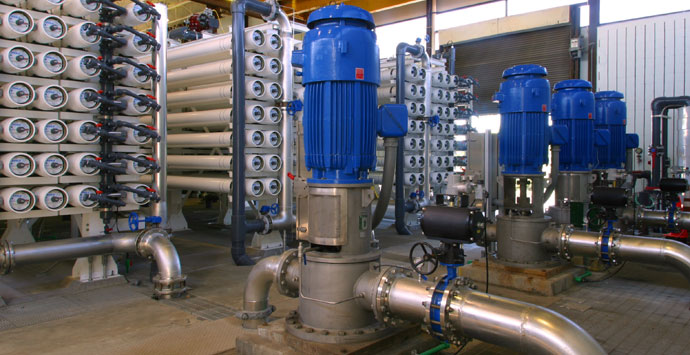
Pretreatment - Pretreatment is typically required to insure a stable, long-term
reverse osmosis (“RO”) system performance and membrane life. In general, surface
sea and waste-waters require more pretreatment than well water supplies.
Pretreatment may include clarification, filtration, ultra-filtration, pH
adjustment, removal of free chlorine, anti-scalent addition and 5 micron
auto-filter or cartridge filtration.
RO Process Design - Spiral-wound RO membrane elements are housed in cylindrical
pressure vessels, with as many as seven inter-connected elements per vessel.
Vessels piped in parallel constitute a single hydraulic stage, which typically
yields 50% recovery of product water based on the feed rate.
The first-stage
concentrate usually feeds one or more downstream stages. Two-stage systems yield
about 75% recovery; three-stage systems yield about 85% recovery, depending on
concentrate chemistry. Pressure vessels are staged in tapered arrays to provide
adequate feed/concentrate flow-rates and to maintain proper differential
operating pressures.
RO Membrane Elements - Membrane elements are based on superior membrane
properties (high rejection of TDS, silica and TOC and excellent chemical and
biodegradation resistance). The plant uses ninety-six (96) spiral-wound
thin-film composite RO elements manufactured by all of the industry's leaders.
The feed water must be free of Fe3 and bacterial contamination. The feed water
piping must be made of non-corrosive materials such as PVC or stainless steel
316.
This system is equipped with an integrated fresh water membrane flushing &
cleaning system. On shutdown the system will automatically flush the membranes
with product water. This same system in manual mode can be used with chemicals
to clean or store the RO membranes.
Desalinization/Purification plant floor space required
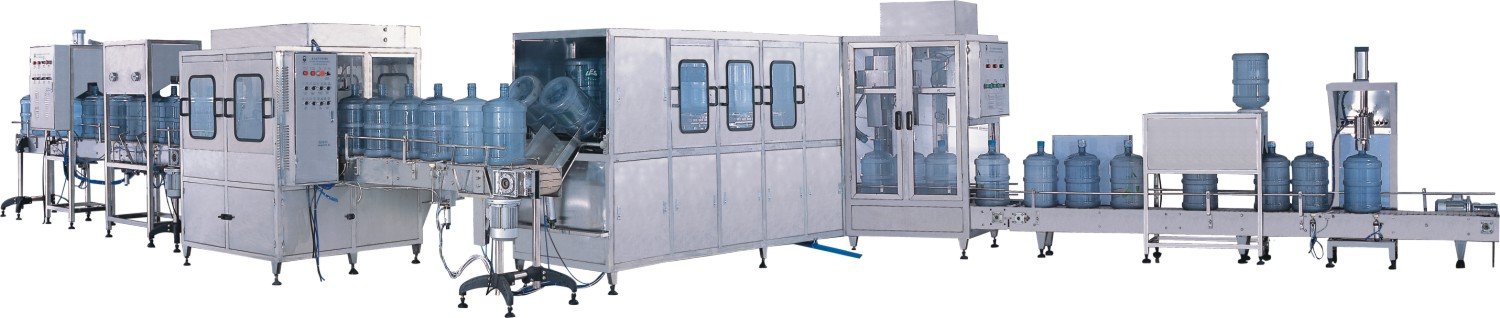
The total floor space
required for the equipment to produce 250,000 gallons of potable water per day
is 2,088 square feet and is allocated as shown above:
Waste Gasification
|
Biomass Gasification
|
Plasma Gasification
|
Hemp 2 Fuel & Power Generation
|
Financing |
About us |
Contact us

|